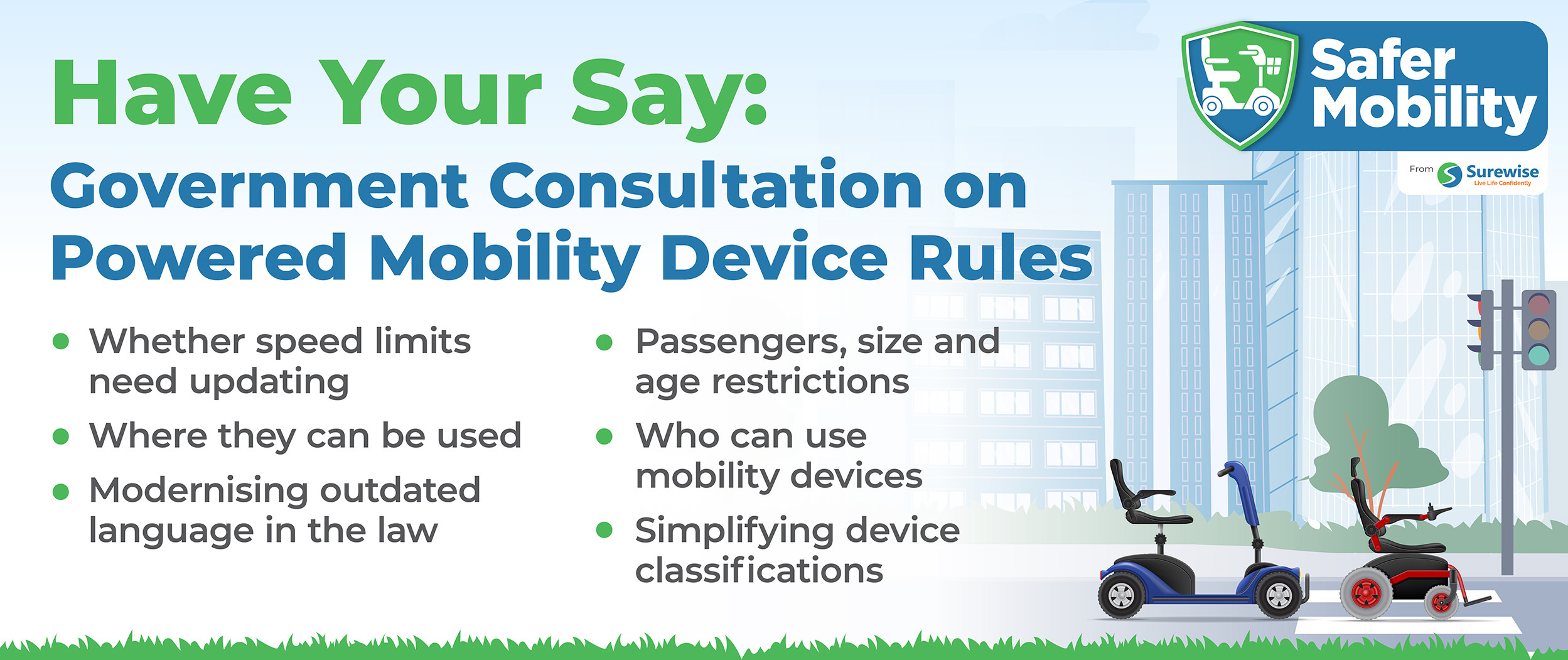
At the start of 2026, the Government announced a consultation on Reviewing the law for powered mobility devices. As part of our campaign, we urged users to respond and share their real-life experiences.
The long-overdue reviewing of mobility device laws was a rare opportunity for people who rely on these devices to help shape rules that affect their independence, safety and everyday lives.
The consultation is now closed. More information is available on the Government website.
Key Details of the Consultation
The consultation is now closed. However, we have detailed our views based on what we see through real-world incidents leading to claims.
1. Speed Restrictions
Many incidents occur when speed reduces reaction time or makes impacts more severe. We understand that there are real, everyday reasons why people need to travel at higher speeds.
However, because speed can reduce reaction times, we believe any increase should be considered only where the infrastructure genuinely supports it – well-maintained roads and pavements, free from hazards such as potholes and uneven surfaces.
We support a speed limit of 4mph on pavements, 8mph in higher-risk areas such as town centres and school zones, and 15.5mph on roads, bringing powered mobility devices in line with e-bikes.
2. Where Mobility Devices Are Allowed
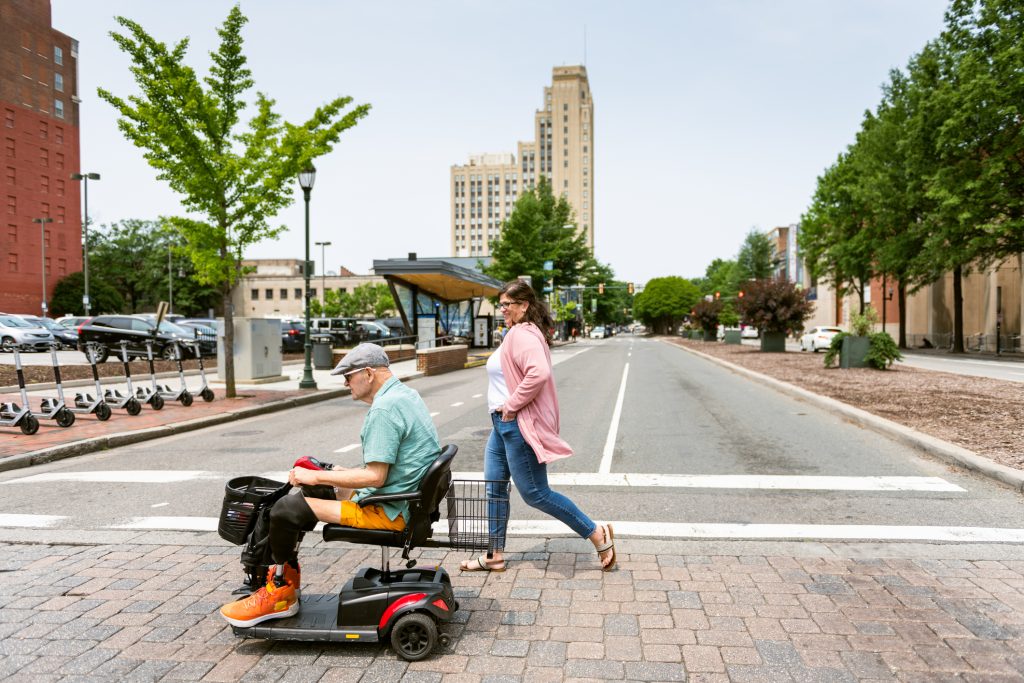
Incidents frequently involve uneven surfaces, kerbs, potholes and poor crossings, highlighting the real challenges users face when navigating everyday environments. These challenges are made worse by unclear rules and inconsistent enforcement of those rules around newer devices such as e-scooters and we believe any updated framework should address enforcement for all powered devices, not mobility devices alone.
Currently, powered mobility devices are not permitted in cycle lanes. We support allowing access where it is safe to do so, and are calling for cycle lanes to be renamed ‘mobility lanes’, better reflecting how these spaces are used and improving safety awareness for all users.
3. Modernising Outdated Language in the Law
Under current legislation, powered wheelchairs and mobility scooters are still legally referred to as ‘invalid carriages’. We fully support the long-overdue change to recognise these devices as ‘mobility devices’ in law, which better reflects the dignity and independence they provide.
Updating the language in the law is a meaningful first step, but we also believe the Highway Code should be updated to include powered mobility device users in the hierarchy of road users, making their right to travel safely clear to everyone.
4. Passengers, Size and Age Restrictions
We support the ability to carry a passenger, provided the device is fitted with an appropriate and safe second seat and meets mandatory safety standards for stability, braking and impact performance.
We do not believe there is a need for restrictions based on weight, age or route, as long as those safety standards are met. Keeping unnecessary restrictions to a minimum means more choice and greater freedom for people who rely on these devices every day.
5. Who Can Use Powered Mobility Devices
We believe that anyone who needs a powered mobility device to maintain their independence should be able to use one legally. Current rules were written decades before modern devices existed and no longer reflect the range of people who rely on them today.
6. Simplifying Device Classifications
We support simplifying the current Class system and provided devices are stable and safe, which is the responsibility of manufacturers, we believe device classes can be removed entirely. A simpler framework means less confusion, more choice and greater independence for people with mobility impairments.
Why The Consultation Was Important
As a specialist mobility scooter insurer, we have a unique insight into the real-world impact of current legislation. That insight, alongside research carried out with Nottingham Trent University, forms the basis of our consultation response.
That evidence highlights why user input is so important in shaping laws.
- Around 60% of incidents involving travel occur in situations where higher speeds reduce reaction time and increase the risk or severity of harm
To be clear, this is not a comment on the speed the vehicle was travelling at the time of the incident, nor on the user’s ability to moderate their speed in the event of increased risk. - A quarter of claims involve collisions in shared spaces such as pavements and town centres
- A further 12% arise from people taking evasive action to avoid collisions
- Nearly a quarter are caused by terrain – including potholes, kerbs and uneven surfaces
This adds to a growing body of evidence at the heart of our Safer Mobility Campaign, dedicated to improving understanding, influencing policy, and supporting safer everyday journeys for those who rely on powered mobility devices.
Find out more about the Safer Mobility Campaign: www.surewise.com/safer-mobility/
Please note: The views expressed here are based on analysis of our own claims data and the experiences of our customers. Everyone is encouraged to submit their own views and experiences as part of this consultation. Your voice matters, and every response is important.