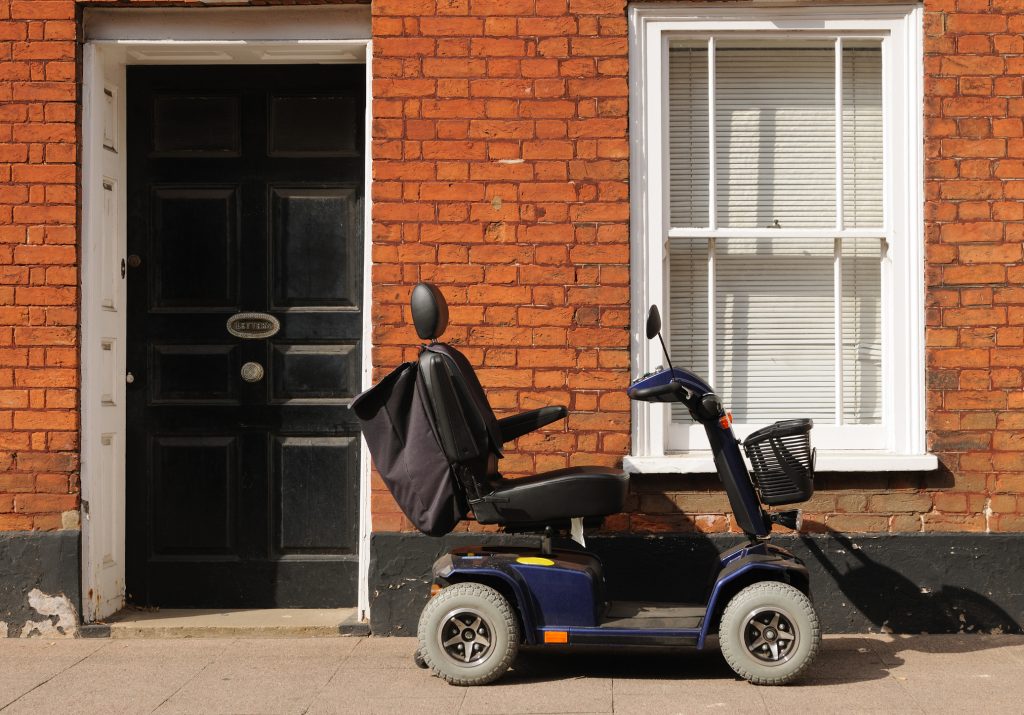
Buying a second-hand mobility scooter can be a smart move.
First and foremost, second-hand buyers enjoy significant cost savings – for a new scooter, you will be looking to pay somewhere between £1,000 and £6,000.
A pre-owned mobility scooter can cost a fraction of that – a fifty per cent saving on the price of a new one is not unknown.
However, when shopping around for a second-hand scooter, you need to make sure you avoid some of the common pitfalls that await unwary buyers.
To do that, you need to recognise important red flags when buying a scooter in the second-hand market – read on to find out how to do that.
Contents
- Where to Buy Used Mobility Scooters
- Top 5 Second-Hand Mobility Scooter Dealers
- Dealer vs Private Sale
- Essential Pre-Purchase
- Battery Health
- Inspecting Tyres
- Suspension Test
- Testing the Brakes
- Checking the Steering
- Framework Check
- The Test Drive: What to Check
- Red Flags to Look Out For
- Insuring a Second-Hand Mobility Scooter
Cost Savings
A used scooter will typically be somewhere around 40–70% cheaper than the equivalent new one.
Reducing the upfront cost is one significant saving when buying a scooter, but other savings come into play with a second-hand scooter.
For example, don’t forget to factor in insurance and how much value the scooter will lose over time.
New mobility scooters, like all vehicles, depreciate as soon as they leave the showroom, so you can expect a second-hand scooter to hold its value better than a brand new one.
At the same time, insurance premiums are in large part based on the purchase price of the vehicle, so the less you pay up front for the scooter, the lower you can expect your insurance premiums to be.
Where to Buy Used Mobility Scooters
Deciding that you are going to buy a pre-owned mobility scooter is the easy bit.
The next step is the difficult one – finding a trustworthy retailer, reseller or private seller that has the model you want at a price you’re willing to pay.
The main places you find a second-hand scooter include:
- Specialist mobility dealers
- Independent high street mobility scooter shop
- Online resellers and marketplaces
- Local mobility and rehab centres
- Local community and charity groups
Top 5 Second-Hand Mobility Scooter Dealers
| Dealer | TP Score | Trustpilot Review | Notes |
| Mobility Giant | ⭐ 4.9/5 | Review | Excellent national reputation; thousands of positive reviews. |
| GMS Mobility | ⭐ 4.9/5 | Review | Lots of top reviews, with strong praise for its aftercare service. |
| Eden Mobility | ⭐ 4.8/5 | Review | Very popular scooter dealer with branches across the UK and strong ratings. |
| Mobility Smart | ⭐ 4.8/5 | Review | Top-rated dealership for a broad range of mobility products, including scooters. |
| Used Mobility Scooter Shop | ⭐ 4.5/5 | Review | Independent scooter specialist with strong customer feedback. |
Dealer vs Private Sale
An important question you should ask yourself when shopping around for a second-hand scooter is: ‘Do I want to go with a dealer or find one through a private sale?’
There are pros and cons to both approaches.
Private Seller: Pros
- Bargains: A private sale, usually via a website like eBay, Facebook Marketplace or GumTree, will typically result in you paying less for the vehicle, good if you are looking for short-term use or if you’re on a tight budget
- Quick sales: You can sometimes find real deals through private sales, especially if the seller is looking to raise some quick cash.
Private Seller: Cons
- Sold as seen: You will often have no comeback or warranty with a private seller if the scooter develops a fault or breaks down.
- Battery condition is unknown: You don’t really know the status or history of the battery, and batteries are typically the most expensive parts to replace in a scooter.
- Patchy history: You won’t know the scooter’s age, service history, or faults just from the item’s listing.
- Needs research: Before buying from a private seller, extensive research and checks need to be carried out.

Dealer: Pros
- Warranty: A scooter bought through a legitimate dealer will typically come with a warranty of around three to twelve months, which gives you peace of mind that the vehicle will be fixed or replaced if something goes wrong.
- Professional servicing: A scooter dealership will typically carry out a full safety check and service before it advertises its scooters, ensuring its models are ready to be used the moment they leave the building.
- Battery guarantee: By buying through a dealer, you can be sure the scooter battery is in good condition, and the condition of the battery will also often be backed by a warranty and service record, giving you extra peace of mind.
- After-sales support: The service often doesn’t end when you wheel the scooter off the lot at a dealership, as many sellers also often offer an ongoing maintenance service, repairs, and spare parts.
- Trade-in and part-exchange options: Many dealers will knock something off the ticket price if you bring them your old scooter to sweeten the deal.
Dealer: Cons
- Higher price: You will typically be looking at around an extra £150–£200 added on to the sale price of a scooter bought through a dealer, compared to a private sale.
- Less room for price haggling: A dealership will not generally be able to budge much on its ticket price, and will certainly have a lot less room for price flexibility than a private seller.
- Limited model selection: Some dealerships may only stock certain brands or scooter models, limiting your buying options.
- Pressure to upsell: Some scooter dealers may want to get as much money as they can out of you while you are in the shop by trying to sell you extras like extended warranties, scooter accessories, and special servicing packages.
Essential Pre-Purchase Checklist
Seller and Paperwork
| What to Check | Reason to Reconsider |
| Proof of purchase or receipt | No proof of purchase or sales invoice, and if the seller is vague about the provenance of the scooter |
| Service history | No history, and the scooter looks older than the listing suggests |
| Reason for selling | Suspicious or evasive answers |
| Seller legitimately owns the scooter | If the seller can’t or won’t confirm ownership of the scooter |
General Condition
| What to Check | Reason to reconsider |
| No rust or frame cracks | Substantial rust or the frame is badly damaged |
| Tyres not worn or cracked | Tyres are cracked, very worn, or mismatched |
| Seat and armrests in good condition | Seat ripped or armrests loose |
| Tiller and steering column fixed in place | Steering wobbles or feels unstable |
| No water damage or mould | Smell of mould or signs of water |
Battery
| What to Check | Reason to reconsider |
| Battery age ( <2 years) | The battery is older than two years |
| Full charge test | Won’t hold a full charge |
| Duration test (10–15 min drive) | The battery drops quickly or dies early |
| Battery type (lead-acid or lithium) | Unclear what type of battery is fitted |
Performance and Driving
| What to Check | Reason to reconsider |
| Smooth acceleration | Sluggish start or jerky movement |
| Brakes stop scooter promptly when pressed | Brakes are intermittent or unresponsive |
| Reverse works | No reverse |
| No wobble when steering | Steering clunks or drifts |
| Suspension (if fitted) works | Doesn’t provide the support you expect and need |
Electrics and Controls
| What to Check | Reason to reconsider |
| Horn works | Horn not working |
| Lights/indicators work | Lights flicker or don’t work |
| Display panel works | Display not working |
| The key switch works | Key ‘sticky’ or fails to turn |
| Buttons feel solid | Buttons loose or broken |
Safety and Comfort
| What to Check | Reason to reconsider |
| Seat adjustment works | Seat won’t lock into place or slips |
| Footboard solid | Footboard cracked or loose |
| Tiller adjustment works | Tiller won’t stay put |
| Anti-tip wheels ok | Anti-tip wheels faulty |
Charger and Accessories
| What to Check | Reason to reconsider |
| Charger works and matches the scooter model and type | The charger is missing or doesn’t charge the vehicle |
| Basket, mirrors, lights and rain cover supplied | Important accessories are missing. |
Other
| What to Check | Reason to reconsider |
| Supports user weight and fits comfortably | Scooter too small or under-rated for the user’s body type |
| Can be collapsed or fit into the user’s car/home | Too large for a user’s car or home storage |
| Motor runs smoothly without grinding | Grinding, whining, and other unusual noises |
| Battery replacement reasonable | Replacement cost is high |
Checking Battery Health
A few key questions about the battery can help you decide whether a used mobility scooter is a good buy.
Replacement batteries can be expensive – lithium packs found in newer folding models typically cost £300–£600, and even a well-maintained battery will usually need replacing every two to four years.
Before you commit, ask the seller:
- Is this the original battery, and if not, when was it last replaced?
- Does it come with a working charger?
- Do you have the original purchase receipt for the scooter?
Inspecting Tyres, Wheels and Suspension
When inspecting the tyres of a used mobility scooter, there are several aspects of tyre condition and status you need to check.
Tyres and Wheels
Good tyres keep you safe – they help the scooter stop quickly and stay put when you’re parked on a slope.
When checking the tyres, look for:
- Tread depth: The pattern should be clearly visible with grooves deep enough to grip the ground. A simple test – run your fingernail across the tyre. If it catches in the grooves, there’s enough tread left. If your nail glides over without catching, the tyre is worn and will likely need replacing.
- Cracks or dry rot: Fine spiderweb cracks suggest early dry rot, while deeper cracks mean it’s more advanced. Either way, the tyre is deteriorating.
- Bulges or deformities: These indicate internal damage, often from hitting kerbs or potholes. Bulges weaken the tyre and increase the risk of sudden failure.
- Uneven wear: This can point to alignment or suspension issues, which may affect the scooter’s stability and comfort.
For the wheels themselves, check that the rims aren’t bent, cracked, or damaged – this can affect stability and safety.
If possible, give each wheel a spin. It should turn smoothly without wobbling, grinding, or clicking. Any of these sounds or movements could indicate worn bearings or loose fittings that need attention.
Suspension: The Bounce Test
A simple way to check whether the suspension is working properly is to sit on the scooter and perform a quick bounce test.
With your full weight on the seat, press down firmly – or if it’s safe to do so, stand briefly on the footplate – then release. The scooter should bounce once or twice before settling smoothly back into position.
If it keeps bouncing, feels stiff and doesn’t move at all, or makes clunking noises, the suspension may be worn or damaged.
Testing the Brakes
Drive the scooter slowly and apply the brakes; it should stop smoothly and immediately, without juddering.
To test the electromagnetic brake, release the throttle while the scooter is moving. This brake should engage automatically and bring you to a prompt stop.
Listen for any grinding, clicking, or scraping during braking, as these can indicate worn brakes or other mechanical issues.
Checking the Steering
While stationary, turn the handlebars fully left and right. The movement should feel smooth, with no stiffness or resistance.
Then take the scooter for a slow drive. It should respond easily to your steering and travel in a straight line without drifting to one side.
Any wobbling, vibration, or knocking sounds when you steer could suggest worn components or loose fittings.

Mobility Insurance
Cover includes:
- Theft, Vandalism & Accidental Damage
- Third Party Liability & Legal Expenses
- Multiple Riders & No Age Limit
- No Hidden Fees & No Excess
Testing the Charging System
If you have a multimeter, you can check whether the charger is working properly.
Plug the charger into the wall, but don’t connect it to the scooter. Set the multimeter to DC voltage and select a range higher than the charger’s output (this is usually printed on the charger label – typically 24V, 29.4V, or 36V).
Hold the probes by their insulated grips and touch the red probe to the positive (+) contact and the black probe to the negative (−) contact on the charger plug.
The reading should be close to the voltage shown on the charger label. If it’s much lower or shows zero, the charger may be faulty.
Frame and Bodywork Inspection
Checking a scooter’s frame and bodywork is all about checking for rust and visible cracks, especially around vulnerable areas like frame joins and welds.
Frame & Bodywork Inspection: Key Checks
| Scooter Part | What to Check |
| Steering column base | Ensure the column is secure and not wobbling. Examine the base where the steering column meets the frame Check for cracks, splits, or broken weld beads |
| Front fork | Inspect for cracks, bends, or twisting Check for rust or corrosion Ensure smooth movement with no wobble |
| Axle mounts | Check for cracks or fractures around the mount Look for rust or wear where the wheel connects Ensure the wheel is tight with no movement |
| Seat post mount | Check for cracks or bending at the joint Ensure bolts are tight and not missing Confirm the seat post locks securely with no wobble |
| Footplate | Inspect for cracks, bending, or soft spots Check for rust underneath the plate Ensure it feels solid and even under weight |
| Battery compartment | Look for corrosion or rust inside Check for battery leaks or acid stains Ensure the compartment closes securely |
| Bolts and fasteners | Confirm all bolts are present and tight Look for stripped threads or rusted bolts Check for loose or vibrating fasteners |
Service History and Documentation
The papers that come with a second-hand scooter are just as important as the mechanical parts that make it up.
The two pieces of documentation you should ask to see when buying a second-hand mobility scooter are:
- The original purchase receipt (proof of ownership)
- The scooter’s service history or maintenance log
Proof of Ownership
- Proves that the individual selling the scooter is the legitimate owner
- Confirms the age of the scooter you’re interested in – from this, you can tell how well-maintained it is and how long the battery might have left if it’s the original
- It lets you see the official make, model, and serial number of the scooter, which you can check against the vehicle you are being sold
- Confirms the scooter’s warranty status (how long it has left to run)
Photo Proof
If possible, get a copy or take a photo of the seller’s original purchase receipt.
This protects you because it shows you purchased from the legal owner, helps with insurance or resale later and avoids confusion over warranties or ownership history.
Service History
- The dates of services the scooter has undergone.
- Information about what was checked or repaired, and why.
- The name and address of the dealer or technician who undertook the work.
- Battery replacement information.
Remember: If you plan to buy a used Class 3 scooter, be sure to ask the seller for the V5C logbook. If they don’t have it, you will need to register the scooter yourself using a V55/MV form from the DVLA.
The Test Drive: What to Check
The test drive is where the rubber really hits the road when it comes to buying a second-hand scooter.
It’s sometimes best to divide the test drive into two parts – before and after the actual drive.
At each stage, you need to check that the scooter is performing as it should and isn’t setting off any alarms or red flags.
Before the Drive
Before you set off, take a moment to check a few things while the scooter is stationary.
Turn the key or press the power button – the scooter should switch on straight away without any delay or unusual sounds. If it has a battery indicator or display panel, check that it lights up and shows a reading.
Have a quick look at the controls – the speed dial, forward/reverse switch, and any buttons should all feel solid and work as expected.
Finally, listen and smell – there shouldn’t be any buzzing, clicking, or burning smells coming from the motor or electrics.
During the Drive
Once you’re moving, pay attention to how the scooter feels and sounds.
The acceleration should be smooth and steady, with no jerking or surging when you press or release the throttle. The scooter should travel in a straight line without pulling to one side or wobbling, and the steering should feel easy to turn – not stiff or loose.
When you brake, the scooter should stop smoothly and promptly without any grinding or scraping sounds. If the scooter has suspension, it should absorb bumps comfortably without excessive bouncing.
Listen out for any unusual noises while you’re driving – grinding, squealing, or rattling could point to a mechanical issue. And if the scooter has a display panel, keep an eye out for any warning lights or fault indicators.
Finally, after you’ve been driving for a few minutes, switch the scooter off and restart it. It should power back on just as easily as it did the first time.
Red Flags to Look Out For
| Category | Red Flag |
| Battery | Seller can’t or won’t reveal battery age and history |
| The battery doesn’t hold a proper charge, or charging is slow | |
| Corrosion or rust at battery terminals | |
| Mechanical and structural | Tyres are bald or in bad condition |
| Hidden rust under paint or blistering paintwork | |
| Loose or damaged wiring | |
| Documentation and buying process | No service history or maintenance records |
| The seller won’t let you inspect in person | |
| Seller credibility | No warranty or return option |
| Unfamiliar or sketchy seller profile | |
| Too-good-to-be-true price and pressure to pay quickly |
General Scooter-Buying Advice
- Check the weight capacity of the scooter: Running a scooter near its maximum load capacity shortens battery life and stresses components, so check that the scooter you are interested in can easily bear your load, including you and your cargo.
- Inquire about parts availability for the scooter model/brand: It can be difficult to source replacement parts for older and some obscure brands, so ask the seller if he or she has any experience of doing so, and how easy/difficult the experience was.
- Check the cleanliness and hygiene of the scooter: Dirt can clog and cover important moving parts on a vehicle, so give it a once-over to see if it’s clean and tidy before you conduct your inspection.
- Meet in a safe public place if you are buying via a private sale: This is a commonsense move that reduces your personal risk and raises the red flag for scammers who may prefer to do a trade away from prying eyes.
- Ask how the scooter is generally stored ‘off-season’: Mobility scooter batteries degrade quickly when they are left in a cold shed for months on end over the cold winter months, so if a seller answers your question by saying it sat unused in a garage all winter, that’s a hint the battery might not be in the best nick.
Insuring a Second-Hand Mobility Scooter
You are not legally required to take out mobility scooter insurance if you purchase a second-hand scooter, but it’s a good idea to do so.
After all, a scooter is an investment, and you naturally want to protect that investment.
At a minimum, you should look for an insurance company that offers some or all of the following with its mobility scooter insurance policies:
- Public liability insurance
- Theft and accidental damage
- A hire or replacement scooter if yours needs to be fixed
- Personal accident and hospital benefits in the event of an injury
- Breakdown and rescue cover
- Cover that applies across the UK and for all short overseas trips