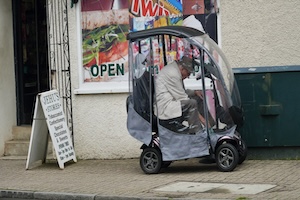
For many people, a pothole is an inconvenience. For a mobility scooter user, it can be life-changing.
While national debate around potholes often focuses on vehicle damage, repair bills and compensation claims, road safety and mobility partners are warning that poor road and pavement maintenance poses a far more serious risk to vulnerable road users – including mobility scooter users, cyclists and motorcyclists.
The warning comes from the Safer Mobility Campaign and the Pothole Partnership, which are calling for mobility scooter users to be explicitly considered in national discussions around potholes, infrastructure standards and long-term road repair policies.
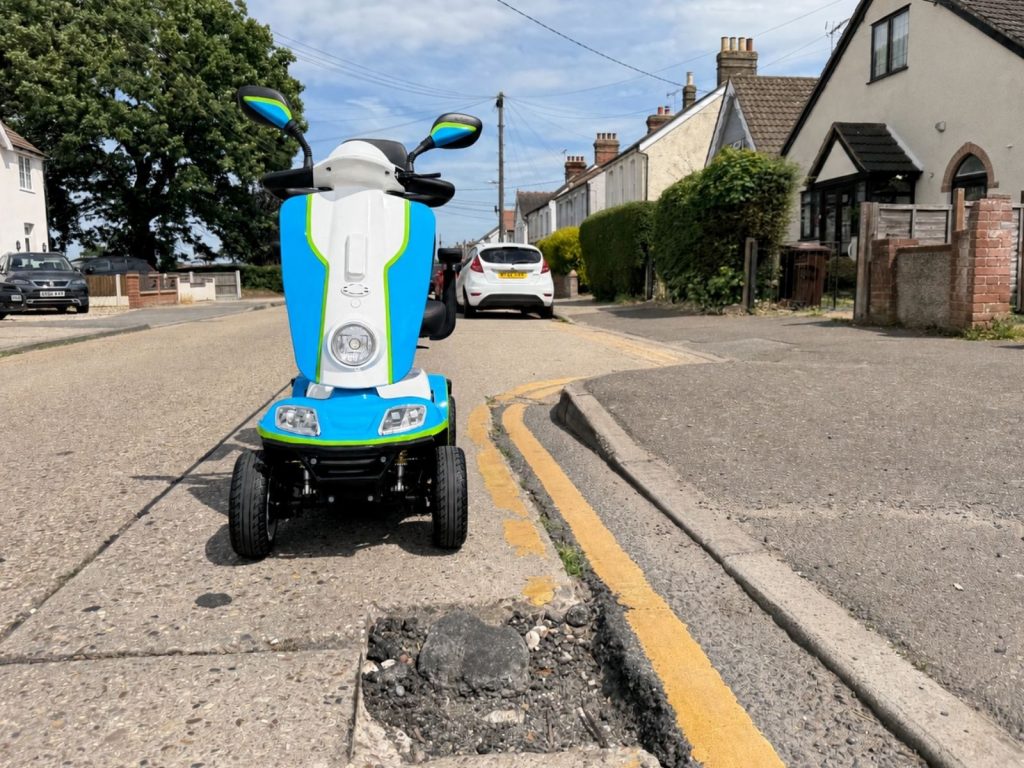
The Safer Mobility Campaign was launched by mobility scooter insurance intermediary Surewise to highlight the growing road safety risks facing mobility scooter and powerchair users and improve understanding of the safety and accessibility challenges they face on Britain’s roads.
The Pothole Partnership consists of The AA, JCB, British Cycling and the National Motorcyclists Council, and was launched to campaign for better long-term road maintenance, improved repair quality and greater accountability for pothole repairs.
With an estimated 750,000 mobility scooters currently in use in the UK and numbers expected to rise as the population ages, the organisations say potholes and poor surface conditions should be recognised not just as a vehicle issue, but as a road safety, accessibility and equality issue.
Evidence gathered through the Safer Mobility Campaign highlights the significant role surface defects play in mobility scooter incidents. Surewise shared 1,638 insurance claims relating to travel and movement incidents with researchers at Nottingham Trent University. Of these, 120 involved potholes – around seven per cent – highlighting the role poor road and pavement surfaces can play in mobility scooter loss-of-control incidents.
The risks are not theoretical. Behind the data are real people who have already been injured after encountering potholes and uneven surfaces. In one case in March, 88-year-old Pat Lowe, from Gloucestershire, became trapped underneath her mobility scooter after it toppled into a pothole, suffering what she described as a “dangerous, horrible wound.”
Richard Hannan, Director of Surewise, said: “For many people, a pothole is an inconvenience. For a mobility scooter user, it can be life-changing. When national conversations focus purely on damaged vehicles and compensation claims, we risk overlooking the human cost of poor infrastructure.
“A damaged car can usually be repaired or replaced. But for an older or disabled person using a mobility scooter, a pothole can result in death, serious injury, a permanent loss of confidence or even the loss of independence altogether.
“If infrastructure is unsafe for mobility scooter users, then it is not truly accessible infrastructure.”
Under UK law, Class 2 mobility scooters are permitted on pavements at speeds of up to 4mph, while Class 3 scooters can travel legally on roads at up to 8mph as well as on pavements at reduced speed.
This leaves users directly exposed to cracked pavements, damaged dropped kerbs, deep potholes, poor temporary reinstatements and edge deterioration near carriageways.
A pothole, raised slab or damaged kerb edge can cause tipping, sudden jolting leading to loss of steering control and users being forced into the carriageway.
The Pothole Partnership continues to campaign for better long-term road maintenance standards, including five-year warranties on pothole repairs to tackle repeat failures and improve accountability.
Edmund King, President of The AA, said:

“Poor road and pavement maintenance does not just damage vehicles – it can have devastating consequences for vulnerable road users.
“Mobility scooter users are too often overlooked in the pothole debate despite being among those most affected by deteriorating infrastructure.
“Improving repair quality, accountability and long-term maintenance standards would directly benefit some of the UK’s most vulnerable road users, including mobility scooter users, cyclists and motorcyclists.”
Department for Transport road casualty data shows that 12 people were killed and 323 people were injured in collisions involving mobility scooters in 2024.
However, the organisations warn the true scale is likely far higher, as many falls and loss-of-control incidents linked to surface defects go unreported, particularly where no other vehicle is involved.
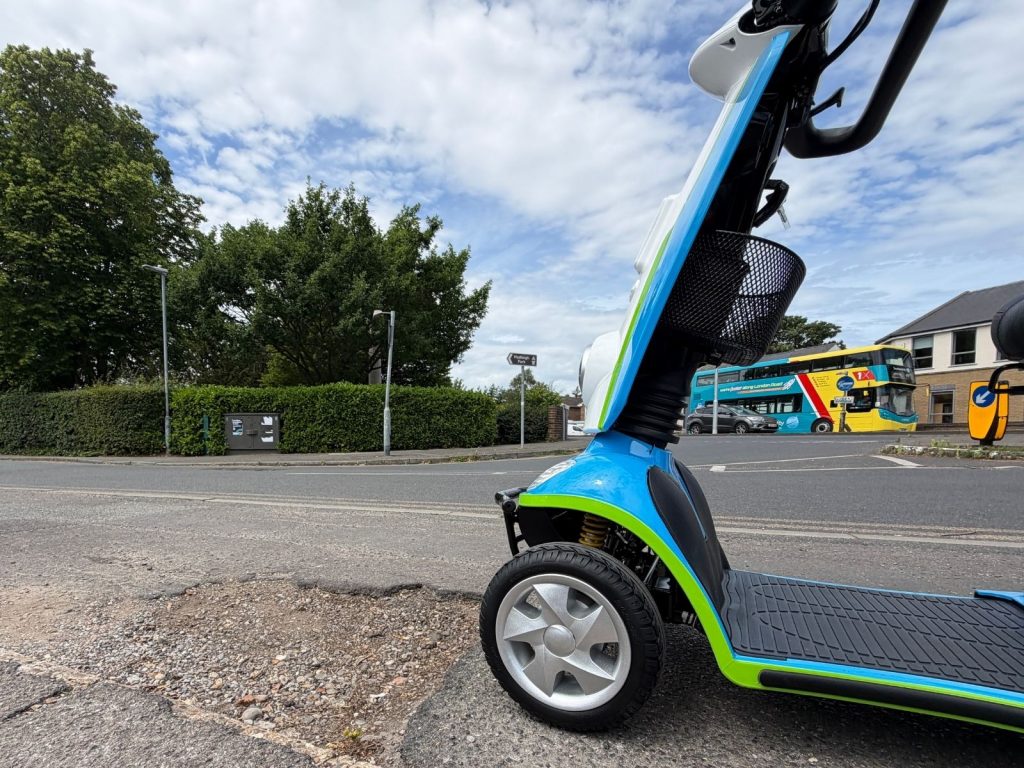
Prof Duncan Guest, Head of Psychology at Nottingham Trent University and a Safer Mobility Campaign partner, who is leading a research study into the lived experiences of mobility scooter users, said:
“Cars damaged by potholes can be repaired or replaced. But for a mobility scooter user, hitting a pothole or uneven surface can result in death or serious injury, permanent loss of confidence, reduced independence or social isolation.
“Our research is helping build a clearer picture of the everyday challenges mobility scooter users face, and infrastructure repeatedly emerges as a significant concern. Unlike pedestrians, mobility scooter users cannot simply step around hazards or choose a safer route.”

The Safer Mobility Campaign is helping build the evidence base around mobility scooter safety alongside Nottingham Trent University and road safety partners across the UK.
The campaign is also supporting a three-year Road Safety Trust-funded research project led by Nottingham Trent University, which will develop a “near miss” reporting app allowing mobility scooter and powerchair users to log hazards and incidents.