When it comes to mobility scooter accessories, there are a multitude of ways you can upgrade your ride and tweak it to make it more comfortable and stylish.
However, the choices can sometimes seem a little overwhelming.
Understandably, you’re often left asking yourself which upgrades you really need, which are the most appropriate for your vehicle type, and how easy they are to fit.
It’s to answer these questions that we have curated this list of the ten best mobility scooter accessories currently on the market.
We have many scooter upgrades you will probably be familiar with, and some other add-ons you won’t necessarily have heard of but won’t want to miss out on.
1. Bags, Baskets & Panniers
Many mobility scooter trips involve visits to shops, such as supermarkets or pharmacies.
It’s essential, therefore, that you have somewhere to store essentials like your purse, phone, and prescriptions while out and about so you can keep your hands free to steer the scooter.
A pannier basket or bag is a convenient way of transporting your essentials and can usually be attached to the scooter’s tiller, armrest or backrest.
What to Look for in an Attachment Type
- Armrest: Best for quick and easy access to personal items like your mobile, keys and medicines. Storage units that fit here tend to be smaller than some of the others, but they are handily located within easy reach on the scooter’s armrest.
- Tiller or handlebars: Ideal if you have valuables you want to keep an eye on and need access to frequently. This type of storage will carry more than an armrest bag, but is not quite as conveniently located as the armrest type.
- Rear seat bag. Perfect for carrying your large shopping bags home from the market or storing bulky medical equipment, a seat bag can be slung over the back of your seat and often comes with up to 30 litres of capacity.
- Rear metal basket: If you need to carry expensive, valuable items, a rear-mounted lockable storage container is the best option.
2. Rear View Mirror
Twisting and turning to check blind spots can cause genuine neck pain, and it’s frustrating too.
A rearview mirror attachment is a simple but highly effective way of taking the pain out of driving, as it allows you to check behind you without twisting your torso.
And remember, if you are getting out and about in a road-legal Class 3 mobility scooter, you are legally required to fit a rear-view mirror to your ride.
What to Look For in a Mirror
- Universal Fit: Many rearview attachments need no special tools or fitting and come with a universal fitting that can be attached easily to a scooter’s handlebar tiller.
- Adjustability: Rearview mirrors that come with an extendable arm allow you to pitch the mirror at the perfect angle so you can take in everything behind you.
- Durability: Sturdy anti-vibration mirrors are a must because the tiller comes in for some buffeting as you negotiate uneven roads and pavements.
- Wide-angle view: A mirror with a curved design is ideal for scooters as it gives the driver a wide field of vision.
3. Gel-infused Memory Foam Cushion
We know a scooter’s seat can often be a bit uncomfortable, especially when it comes to providing the required back support on long journeys.
A gel-infused memory foam cushion will make even the longest journey a more pleasant experience.
A memory foam seat serves to relieve pressure on painful backs, maintains the rider’s posture, and the gel keeps the posterior nice and cool, even on long trips.
What to Look for in a Cushion
- Pressure-relief gel memory foam: A seat cushion and backrest fashioned from foam infused with gel offers ultimate comfort as it moulds to your body shape.
- A wipe-clean material: A vinyl seat cushion cover is a super hygienic way of keeping your cushion clean.
- Anti-slip base: Securing straps and materials invested with friction-inducing materials give extra safety and security as you use the seat.

Mobility Insurance
Cover available for:
- Mobility Scooter
- Powered Wheelchairs
- Manual Wheelchairs
- Cabin Cars
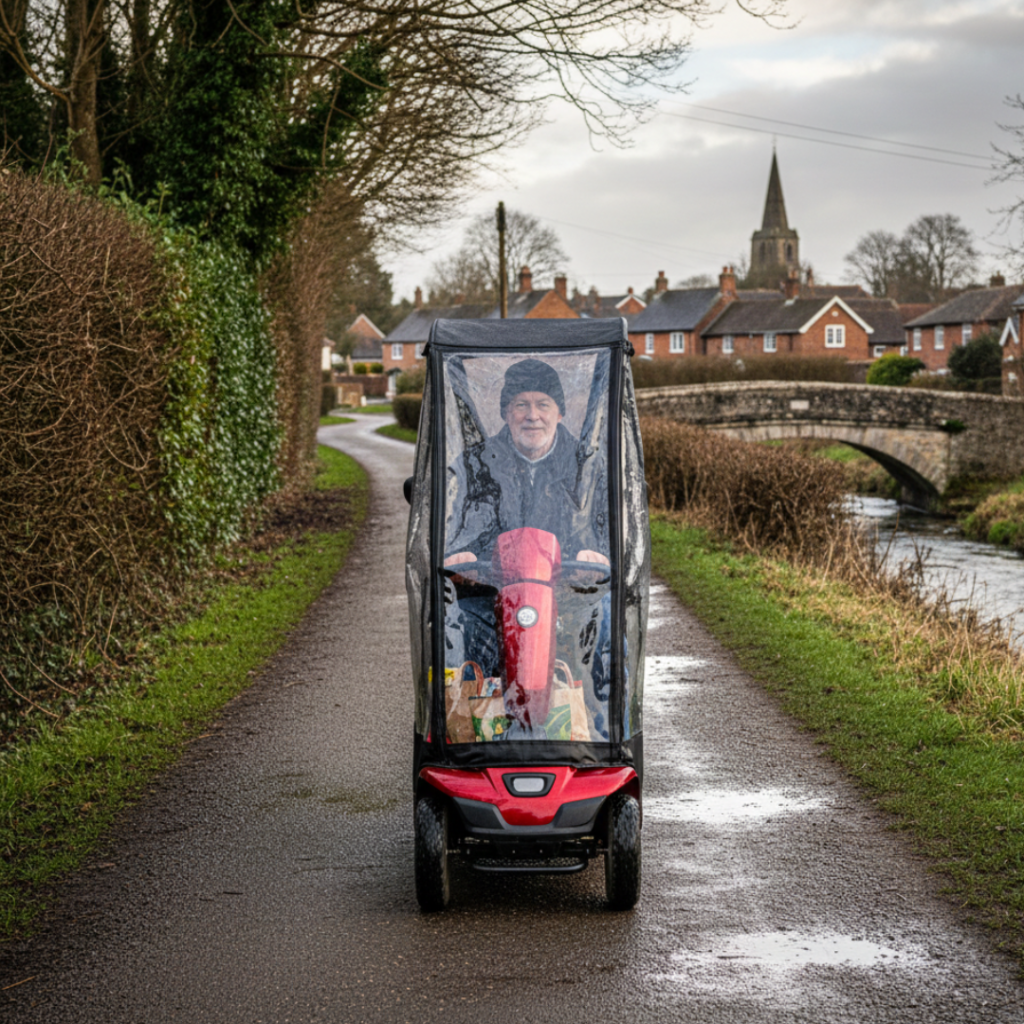
4. All-Weather Cover (Plus Charging Flap)
A mobility scooter is an expensive bit of kit, fitted with not metal mechanical parts that are prone to rust, but also sensitive electrical parts that need to be maintained if they are going to keep functioning.
As such, you must keep your scooter stored properly and protected against the elements when not in use.
A simple waterproof cover will do the job, but for extra protection and convenience, an all-weather scooter cover kitted out with a charging flap is the way to go.
The flap will give you easy access to the vehicle’s charging port so you can keep the battery topped up while stationary.
What to Look for in a Cover
- Waterproofing: Materials like Nylon, polyester, or PVC-coated fabric are considered the best bet when it comes to waterproofing your scooter.
- Heat-sealed joins: Water can seep into a material via its stitching or joins, so opt for a cover that boasts heat-sealed joins to ensure it offers the most robust protection against the elements.
- UV protection: It’s not just rain that can damage your vehicle. The sun’s rays can also degrade parts and electrical components, so look for covers that provide UV resistance.
- Breathable materials: These will help reduce moisture and condensation on the inside of the cover and help reduce rust and material degradation that can result.
5. High Vis Power Capes & Ponchos
They might sound like something straight out of a Marvel comic, but power capes come into their own for mobility scooter drivers during a downpour.
A sleeved waterproof mobility scooter poncho fits snugly over the head and can be tucked in while the vehicle is in motion, clear of the vehicle’s wheels.
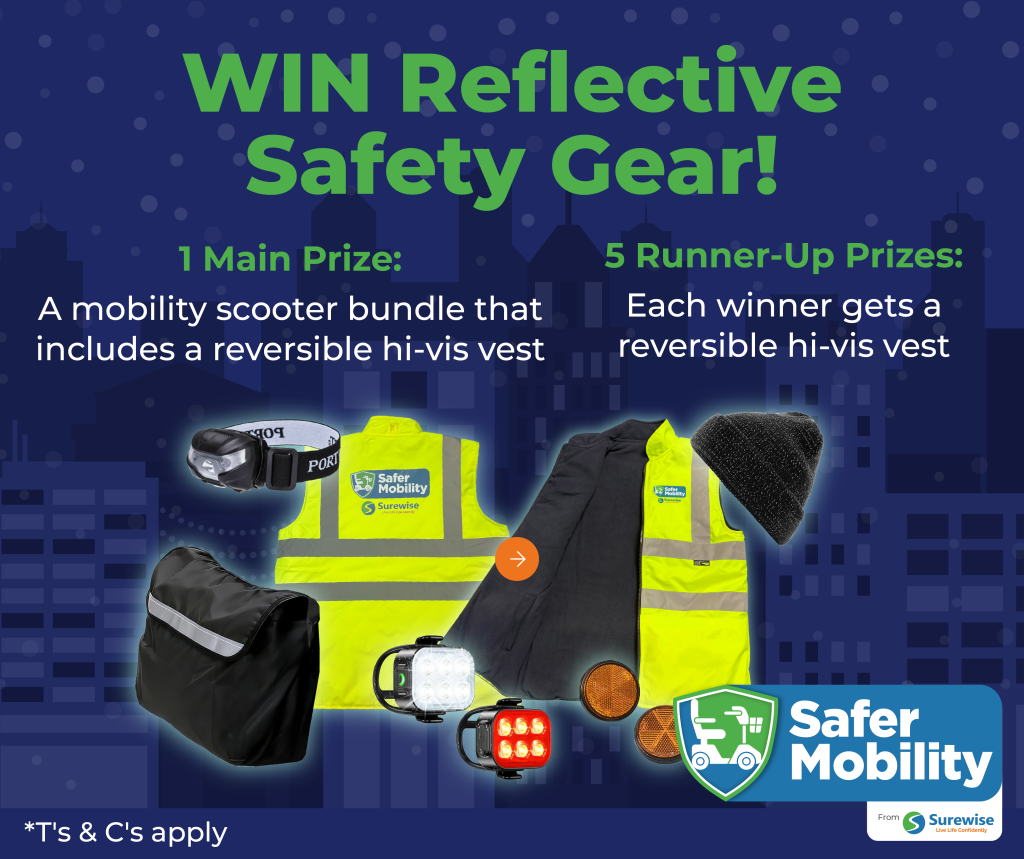
A good cape also serves a safety purpose, as it will also come fitted with high-vis markings on the back and sleeves that keep the rider visible in low-light conditions.
What to Look for in a Cape
- The right size: Go for a cape with generous sleeves, a capacious hood and a main cape body that fully covers both your torso and legs.
- A zippable design: This will keep you fully waterproof and affords extra convenience as it doesn’t have to be removed by pulling it over the head.
- Sealed seams: Capes and ponchos with sealed seams are better at stopping seepage through a fabric’s joins.
6. Oxygen Tank & Medical Equipment Holders
For many mobility scooter users, carrying essential medical equipment like portable oxygen concentrators, nebulisers, or medication is a daily necessity.
Dedicated medical equipment holders ensure your vital supplies are safely secured and easily accessible while you’re on the move.
Most oxygen tank holders attach to the rear mounting bracket or side of the scooter, keeping the equipment stable and upright during travel without affecting your balance or manoeuvrability.
What to Look for in Medical Equipment Holders:
- Universal mounting system: Look for holders with adjustable straps or clamps that fit standard oxygen tank sizes (from portable D-size to larger E-size cylinders)
- Secure fastening: Velcro straps, quick-release buckles, or lockable mechanisms prevent equipment from shifting during travel
- Weather protection: Some holders come with water-resistant covers to protect sensitive medical devices from rain
- Easy access design: Side-mounted holders allow you to check gauges and adjust settings without dismounting
7. GPS Tracker
If you want to keep tabs on your scooter when it’s not in use, you’re going to need to equip it with a GPS tracker.
There are both battery-powered and hard-wired versions of trackers available.
The latter are the surer bet, but need some installation and access to the scooter’s battery and its terminals so that you can install it and then keep it out of sight of prying eyes.
It’s important to bear in mind that a GPS tracker will involve an ongoing expense, as it needs to be permanently connected to a satellite so that the scooter can be tracked.
This means, in addition to the up front cost for the tracker, you will need to pay an ongoing subscription to keep connected to a network.
What to Look for in a GPS
- A voltage between 10 and 30: This will ensure the GPS is compatible with the standard 12-volt battery system used by nearly every mobility scooter in the UK.
- Fork or spade terminals: These are designed to fit under the nuts or bolts of a standard scooter’s battery terminals and provide constant power to the GPS device.
- A two-wire setup (red for positive, black for negative) is the simplest, most universal way to connect a tracker to a scooter battery.
8. Car Hoist
For many people, a mobility scooter is just one of the vehicles they use to get out and about.
If a car is your main mode of transport, it’s convenient to have an easy means of loading and unloading your mobility scooter into its boot so you can use it once you’ve arrived at your main destination.
Car hoists come in two-way and four-way options, the former performing basic up and down lifting and the latter offering the added convenience of lateral or sideways manoeuvring of the scooter.
A hoist will need to be fitted by a professional, but lightweight portable versions are also available, with the hydraulic lifting provided by the power port on the scooter itself.
What to Look for in a Hoist
- Lifting capacity: A hoist can typically lift anywhere between 40kg to 200kg. As a rule of thumb, you should go for a hoist with a capacity that is at least 20% higher than the weight of your scooter.
- Size and fit: You should also ensure there is room in the boot for clearance of the hoist plus the mobility scooter.
9. Mobile Phone Holder
No one wants to be without a mobile phone when out and about, but keeping it safe and secure while you use the scooter can be tricky.
That’s where a mobile phone holder comes in.
These holders can be mounted on most tillers and can also be fitted to the stem of your rearview mirror.
Because you will sometimes be driving over uneven terrain, the holder must have antivibration properties so that it can dampen the physical jarring that would otherwise be transferred to your device, potentially damaging its circuitry.
It is important to remember to take your mobile out of the carrier whenever you leave your scooter unattended, otherwise you may be at risk of theft.
What to Look for in a Phone Holder
- Anti-vibration or vibration dampening: An important feature of any mobility scooter phone holder is vibration dampening, as this will protect the sensitive components in the device.
- Dual chassis system: A phone holder with precision-engineered silicone or elastomer grommets held between the plates will keep your phone protected and secure during the most jerky and juddery journeys.
10. Walking Stick & Crutch Holder
As a mobility scooter user, getting around once you dismount can be a challenge, and you will need your trusty walking stick or crutch to help.
However, finding somewhere to store the stick while on your scooter can be problematic.
Most scooters come fitted with a universal attachment socket (usually a 1-inch square receiver) at the rear of the vehicle, specifically designed for accessories like walking stick holders and mobility aids.
What to Look for in a Stick Holder
- Square port fitting: Look for a holder that can fit into the square ‘female’ receiver – usually 1-inch (25mm) – at the back of your scooter seat.
- A ferrule holder: The stick holder should come with a cup or similar receptacle to hold the ferrule of the stick in place while the vehicle is in motion.
Sitting Pretty
Our top ten list reflects the fact that most people looking to accessorise their mobility scooter are primarily looking to make their scooting experience more comfortable, secure and safe.
But that’s not to say that useful accessories need to trade off functionality for style, because they don’t.
Many of the accessories we have listed can be tailored and come in bespoke versions that are unique to you and your requirements.
And once you have upgraded your ride, you’ll want to protect your upgraded asset with suitable mobility scooter insurance.