If you or someone you care for has a disability or a health condition which affects mobility, you may be eligible to apply for a Blue Badge. A Blue Badge allows you to park closer to a destination, making everyday life easier for you to manage. This guide explains the steps to apply, who’s eligible, what documents you need, how to renew, and more.
What Is a Blue Badge?
A Blue Badge is a parking permit designed to help people with disabilities or serious mobility problems. It allows badge holders to park closer to their destination, either as a driver or passenger.
Parking rules can vary slightly from place to place, so it’s always worth checking your local council’s guidance as well as national rules on GOV.UK. Local councils administer the scheme, but eligibility criteria are set nationally.
Although many people qualify automatically, the latest data from GOV.UK shows that fewer than four in ten eligible people hold a Blue Badge. This suggests that many people who could benefit from the scheme may not realise they are entitled to apply.

Who Can Get a Blue Badge?
You may be able to get a Blue Badge if your health condition or disability affects your ability to walk safely or at all.
There are two ways to qualify: you either automatically qualify due to existing benefits, or you may have to be assessed to determine your eligibility.
Who is Automatically Eligible?
You will usually qualify for a Blue Badge without needing a further assessment if you are aged 3 or over and meet one or more of the following conditions:
- You receive the higher rate of the mobility part of Disability Living Allowance (DLA).
- You receive Personal Independence Payment (PIP) because your condition means you cannot walk very far or walking causes significant difficulty.
- You are registered as blind or severely sight-impaired.
- You receive a War Pensioners’ Mobility Supplement.
- You have received a payment through the Armed Forces or Reserve Forces Compensation Scheme and have a long-term disability that makes walking impossible or very difficult.
- You receive the mobility component of PIP and experience overwhelming psychological distress when trying to plan or make journeys.
If you fall into one of these categories, your benefit award usually acts as proof of eligibility, which can make the application process quicker and more straightforward.

Mobility Insurance
Cover available for:
- Mobility Scooter
- Powered Wheelchairs
- Manual Wheelchairs
- Cabin Cars
Who May Be Eligible (Discretionary Criteria)?
Don’t worry if you’re not receiving any of the benefits listed above. You may still qualify to apply for a Blue Badge if you:
- Cannot walk or can only manage very short distances, or walking causes significant pain, breathlessness, or exhaustion.
- Need help from someone or use walking aids.
- Face serious safety risks when walking, especially near traffic or busy areas.
- Have a life-limiting illness or severe disability affecting your arms, preventing you from using standard parking machines.
- Care for a child under three who requires medical equipment or must stay close to a vehicle for emergency treatment.
- Experience severe anxiety, distress, or difficulties planning journeys, making independent travel extremely challenging.
In these situations, your local council will review your application individually. They may ask for medical or professional evidence and, in some cases, invite you to an assessment.
Your council cannot begin this assessment until all supporting information has been received, and a decision may take up to 12 weeks or longer, depending on demand.
If your application is refused and you believe important details were missed, you have the right to ask the council to review their decision.
Documents You’ll Need for Your Application
When you apply, you will usually need to provide the following:
Identity and Support Documents:
- Proof of identity: passport, driving licence, etc.
- Proof of address: council tax bill, utility bill, etc.
- Photo: a recent, clear photograph of yourself.
- Benefit evidence (if applying under automatic eligibility).
You can upload scans or photos of these documents if you apply online on GOV.UK.
If you prefer to apply by post or cannot upload documents, you can send copies to your local council. Contact details will be available on the council website.
Where and How to Apply
Apply Online
Applying for a Blue Badge online is the quickest and most common way to apply. Most councils now support an online Blue Badge application via GOV.UK: https://www.gov.uk/apply-blue-badge
This service will:
- Ask basic eligibility questions.
- Allow you to upload supporting documents.
- Direct the application to your local council.
Apply Through Your Local Council
If your local council doesn’t use the national online service, or if online forms are difficult, you can:
- Go to your local council’s website.
- Search for “Blue Badge”.
- Download their application form or request one by phone.
Your council should also provide help if you need assistance completing the form.
The Assessment Process
If you don’t automatically qualify for a Blue Badge, your local council may assess you to understand how your condition affects your mobility. This is a standard part of the process.
First, the council will review your application and supporting evidence. If anything is missing, they may contact you for more information.
You may then be offered a mobility assessment, which could take place in person, by phone, video call, or through a paper-based review. This is not a medical test. Instead, it looks at how safely and independently you can walk or manage everyday journeys.
The Decision and How Long It Takes
Once your application (and any assessment, if needed) is complete, your local council will make a decision and let you know in writing. If your application is approved, your Blue Badge will usually be sent by post shortly afterwards.
Processing times vary between councils, but most decisions are made within 8 to 12 weeks. Applications that qualify automatically are often decided more quickly, while assessment-based applications can take a little longer.
If you have been waiting longer than expected, you can contact the council to ask for an update. If your application is refused and you believe not all of your circumstances were considered, you have the right to ask for the decision to be reviewed.
How Much Does a Blue Badge Cost?
The cost of a Blue Badge depends on where you live in the UK. In England, local councils can charge a fee of up to £10 for a badge. In Scotland, the cost is higher, with badges priced at up to £20. In Wales, Blue Badges are issued free of charge.
Most Blue Badges are valid for up to three years, although some may be issued for a shorter period depending on individual circumstances.
How to Renew Your Blue Badge
It’s important to note that a Blue Badge does not renew automatically. You will need to submit a new application before your current badge expires.
To renew your Blue Badge, it’s best to start the process 6 to 10 weeks before your current badge expires. Most councils allow you to apply online through GOV.UK, which is the quickest way to submit your renewal.
You’ll generally need to provide:
- Your current Blue Badge number.
- A recent passport-style photograph.
- Proof of identity and address if these have changed since your last application.
- Your National Insurance number.
Blue Badge Rules and Restrictions
A Blue Badge gives you extra parking privileges, but it doesn’t mean you can park wherever you like. There are important rules you must follow to avoid fines and make sure the system works fairly for everyone.
Where Can You Park
- You can park in bays marked with a wheelchair symbol, usually without charge or time limit, unless the sign says otherwise.
- You may be able to park free of charge and without time limits, but always check the signs in the area, as some councils apply specific conditions.
- You can usually park on both single and double yellow lines for up to three hours, provided there are no loading restrictions shown by kerb markings or signs.
- When parking where time limits apply, you should use the blue parking clock issued with your badge to show your arrival time.
Parking Restrictions
A Blue Badge does not give you a licence to ignore traffic regulations. You must still obey Highway Code rules and council restrictions. Common places you cannot park with a Blue Badge include:
- Where loading or unloading is banned.
- Near pedestrian crossings and the zig-zag markings around them.
- In bus, tram, or cycle lanes while in operation.
- In school keep-clear zones during restricted hours.
- On double white lines in the centre of the road.
- In bays reserved for others, such as residents’ permits, loading bays, taxi ranks, or motorcycle spaces.
- Where temporary restrictions apply, e.g., cones or signs.
- Anywhere your vehicle would obstruct traffic or be dangerous, such as near junctions, on bends, or across dropped kerbs.
Take a look at our article on Blue Badge parking rules for more information.
Using Your Blue Badge Properly
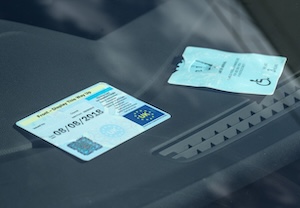
A Blue Badge must be displayed clearly on the dashboard or facia panel, with all details visible through the windscreen.
If the information on your badge fades, you should return it to your council and request a replacement.
The badge is issued for your use only and should only be shown when you, as the badge holder, are travelling in the vehicle, either as a driver or passenger.
You must never lend it to someone else, as misuse is a criminal offence and can result in fines of up to £1,000 and the loss of your badge.
Using a Blue Badge with a Mobility Scooter
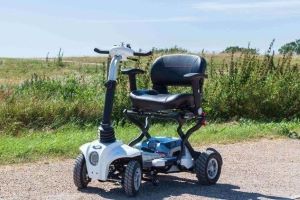
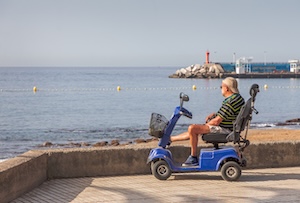
Your Blue Badge belongs to you, not any specific vehicle, so you can use it when travelling with your mobility scooter. For example, if someone drives you somewhere and needs to park.
When using pavements, always ride safely, at a sensible speed, and be considerate to those around you. Many councils have guidance for Blue Badge holders using mobility scooters or powered wheelchairs, so check your local council’s website if you’re unsure.
Making Life Easier with a Blue Badge
A Blue Badge is more than just a parking permit; it can make everyday life a lot easier for people with mobility difficulties. It helps you get closer to where you need to go, reduces the strain of walking, and gives you more independence when getting around.
With millions of Blue Badges in use across the UK, the scheme is an important part of making travel more accessible for those who need it.
Whether this is your first application or you’re renewing, this guide can help make applying for a Blue Badge easier.