Mobility scooter users are being forced into roads, potholes and other hazards as they try to navigate pavements blocked by vehicles, new analysis of insurance claims has revealed.
Insurance intermediary Surewise reviewed 34 claims involving vehicles blocking or obstructing pavements. The cases included riders being forced off pavements into the road, where they encountered potholes, an uncovered drain, loose gravel or kerb edges.
Some mobility scooter users were struck by opening vehicle doors or by vehicles reversing or moving. One of the most serious claims involved a rider hit by a car near a church footpath. An ambulance was called, and the rider spent 21 days in hospital and required 25 stitches.
The findings come as councils across England prepare for new powers to tackle pavement parking, prompting calls for mobility scooter users to have a voice in how the changes are implemented locally.
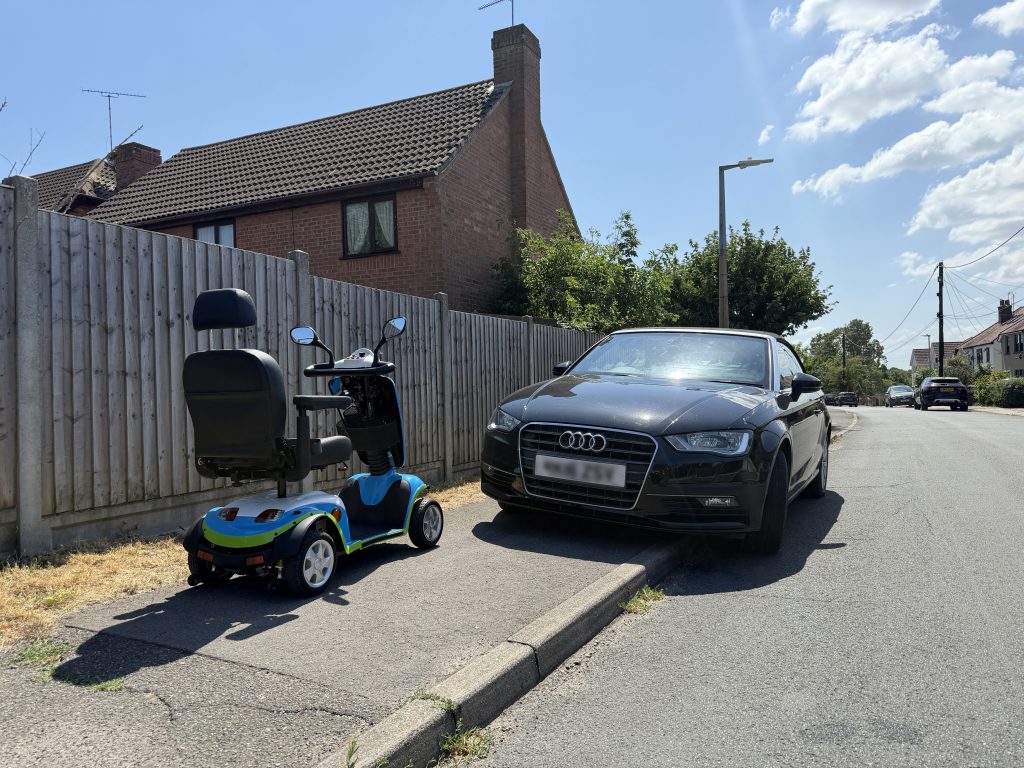
The Government has opted for a locally led approach to pavement parking in England, rather than a nationwide ban. The English Devolution and Community Empowerment Act 2026 provides the legal framework for regulations enabling local transport authorities to introduce area-wide pavement parking prohibitions, subject to exemptions and within civil enforcement areas.
Separately, the Government has announced plans to give councils with civil parking enforcement powers the ability to tackle unnecessary obstruction of pavements through secondary legislation.
Richard Hannan, Director of Surewise, said:
“These new powers are a real opportunity to tackle pavement parking in a way that makes a difference to the people most affected by it.
“We want mobility scooter users to have a voice in how councils approach this locally. If parked vehicles are leaving people unable to use the pavement safely, blocking the dropped kerbs they rely on or forcing them into the road, those experiences need to be heard.”
Pavement parking can make journeys difficult or unsafe for many people. For mobility scooter users, a blocked pavement or obstructed dropped kerb can leave no safe, accessible route past a parked vehicle, forcing them into the road or preventing them from continuing their journey.
The claims findings have been released against a wider backdrop of harm in collisions involving mobility scooters. Analysis of Department for Transport road casualty data by Agilysis shows that 11 people were killed and 343 were injured in reported road collisions involving mobility scooters across Great Britain in 2025 – a total of 354 casualties and the highest annual casualty count on record.
They have been released as part of the Safer Mobility Campaign, supported by Nottingham Trent University (NTU) and Warwickshire Road Safety Partnership, which works to improve safety and raise awareness of the challenges faced by mobility scooter users.
For Karen Richards, a 49-year-old serving Warwickshire Police officer with 25 years of frontline experience, those challenges only became apparent when a serious injury temporarily changed the way she travelled.
A police response driver and dog handler, Karen suffered a complete rupture of her anterior cruciate ligament (ACL) while on duty in February and underwent reconstructive surgery in April. Unable to walk independently following the operation, she borrowed a Class 3 mobility scooter, which allowed her to maintain some independence during her recovery.
She said narrow and poorly maintained pavements, inaccessible or missing dropped kerbs and vehicles parked across footpaths all made journeys more difficult. Every trip required more planning – from whether pavements would be wide enough to where suitable dropped kerbs were located and how she could safely navigate any obstructions.
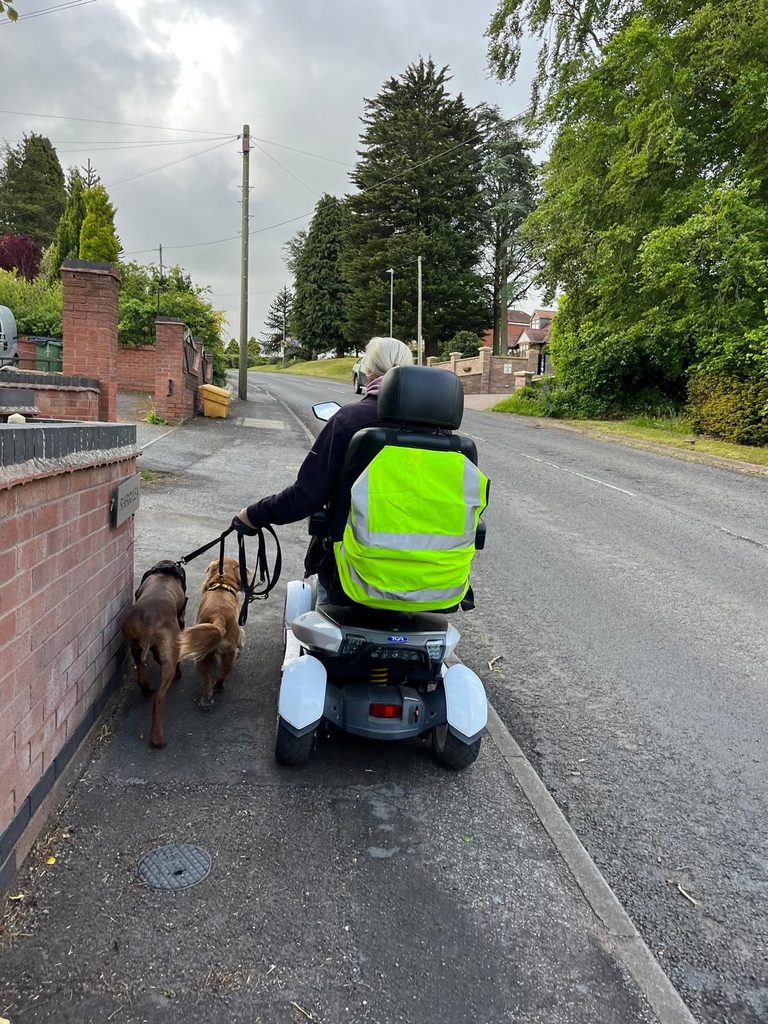
Karen said: “As an able-bodied and active person, I had never really thought about these issues before. It made me realise how difficult everyday journeys can be for people who rely on mobility scooters.”
Being forced onto the carriageway brought additional risks. Karen said drivers sometimes sounded their horns at her, while others drove closely behind before slowing or overtaking.
She added: “It has made me much more aware of the issues mobility scooter users face every day. It also highlighted the need for greater understanding from drivers about vulnerable road users and their right to use the road when necessary.”
IAM RoadSmart is supporting calls for drivers to think carefully about how and where they park and the impact their choices can have on vulnerable pavement users.
The road safety charity’s own research has previously highlighted the prevalence of pavement obstruction, while it has also contributed evidence to Parliament on pavement parking and the balance between accessibility, safety and the practical needs of road users.
Nicholas Lyes, Director of Policy and Standards at IAM RoadSmart, said:
“While it’s understandable people may worry about parking their cars on narrow streets, pavements should be kept clear for pedestrians and at the very least there should be enough space for wheelchairs, mobility scooters or prams.
“By parking on the pavement, you are making life a lot more dangerous for some of the most vulnerable people, while simultaneously you could be damaging your vehicle.”
Surewise is urging mobility scooter users, disabled people and others affected by pavement obstruction to share examples with their local transport authority now, and is calling on councils to seek their views as they decide how to use the new powers.
Professor Duncan Guest, a cognitive psychologist at Nottingham Trent University, led a two-year study into how mobility scooter users perceive road hazards. He is now working on an app that will allow users to record near misses and the circumstances surrounding them.
He said: “A collision is often the end of a much longer story. Mobility scooter users may encounter the same hazard repeatedly, change their route or narrowly avoid harm, without any of that appearing in casualty figures.
“Our research looks at road hazards from the perspective of people using mobility scooters. The app we’re developing will help record near misses and what led to them, giving us a clearer picture of the risks people face on everyday journeys.
“That evidence could help councils understand where pavement parking is creating problems before someone is hurt.”