When temperatures drop, the temptation to turn up the thermostat increases — but, like many households, we often dread the winter heating bill before it’s even arrived.
As the cost of living continues to rise, many of us are looking for simple ways to save money on our heating bills. Data from the Department for Energy Security and Net Zero indicates that last year, approximately 2.73 million households, roughly 11% of families, were living in fuel poverty.
These are worrying figures that highlight just how many families are struggling to afford basic heating. Finding ways to reduce costs could make a real difference, helping households save money on their heating bills and ease this financial pressure.
Luckily, there are many practical ways you can save money on your heating bills. In this guide, we will take you through practical tips you can start straight away.
Whether you want quick solutions or ways to save over the long term, by the end of this guide, you’ll have clear tips and advice on how to keep your property warm without breaking the bank.
Simple Actions that Don’t Cost a Penny
Turn Down Your Thermostat
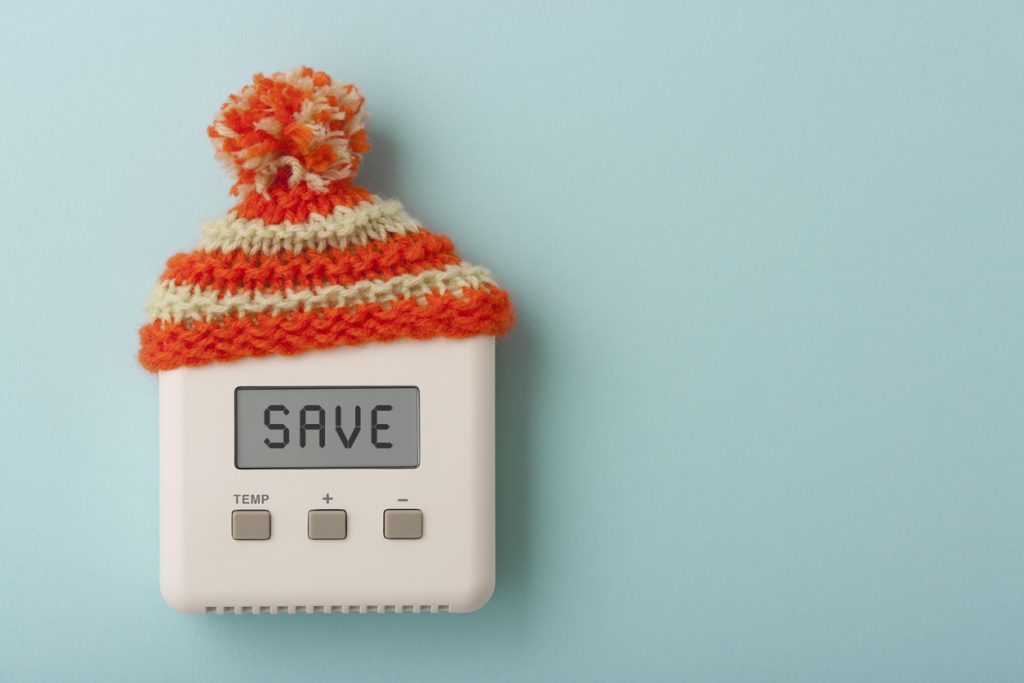
This might sound obvious, but did you know that lowering your thermostat by just 1 °C could save you around 10% on your heating bill? This figure is what the Energy Saving Trust estimates households could save by making that one small change.
Best of all, this simple change has no upfront cost. It’s quick to adjust, and if your home remains comfortable, it’s often a no‑brainer.
Draught-Proof Your Home
Another quick way to save is draught-proofing. By reducing the amount of cold air entering your home, you should see a noticeable difference. The Energy Saving Trust estimates sealing draughts in a typical UK home can save up to £85 a year.
Start by checking for rattles and whistling noises. You might be able to see gaps, such as light coming in near doors and windows. Loft hatches and floorboards with small gaps or cracks can let in cold air. Open fireplaces or unused chimneys can also draw warm air out if not sealed properly.
Some simple, inexpensive fixes can make a noticeable difference, such as draught excluders, door brush strips and self-adhesive foam strips for windows and doors.
Bleed Your Radiators
Are some of your radiators not heating up properly? Trapped air in radiators stops hot water from circulating properly, leaving cold spots and making your heating system work harder.
This simple task will allow heat to spread evenly and rooms to warm up faster. As a result, your boiler doesn’t have to run as long, which can reduce energy use and lower your heating bills.

Home Insurance
Cover includes:
- Partial Or Full Rebuild Up To £1m
- Contents Cover Up To £100,000
- Tailored Policy To Your Requirements
- Policies Provided By sagic
Make Sure Your Heating System is Running Efficiently
Check the Boiler Pressure & Get an Annual Service
An efficient boiler starts with regular maintenance and is the heart of a cost‑effective heating system. Checking your boiler’s pressure gauge helps ensure water circulates properly; if pressure is too low, the system works harder and less efficiently.
It is recommended to book an annual boiler service with a qualified engineer. A service can catch early signs of wear, leaks, or inefficiency before they escalate, which helps prevent breakdowns, ensures your boiler runs smoothly over winter, and can even prolong its life.
Use Thermostatic Radiator Valves (TRVs)
Fitting or using TRVs lets you control the temperature room by room, so you only heat the spaces you’re using.
For living rooms or frequently used rooms, set the TRV to a comfortable medium level. For bedrooms, or rooms you rarely use, lower the setting and only adjust when needed. With this approach, you avoid wasting energy heating empty spaces, which saves heating and reduces bills.
Adjust Your Boiler’s Flow Temperature
Many boilers are set far higher than they need to be, which means they heat water to unnecessarily high temperatures and waste energy. If you lower the flow temperature, the heat of the water travelling from the boiler to your radiators helps your system run more efficiently.
A setting of around 60–65°C is usually enough to keep your home warm while allowing the boiler to operate in its most efficient mode.
According to the Energy Saving Trust, reducing the flow temperature can improve boiler efficiency by around 4–5%, depending on your current settings. Research by Nesta also found that dropping a combi boiler from 80°C to 60°C could cut gas use by nearly 9%, offering a simple way to trim heating bills.
Smart Control Technologies
Smart Thermostats
Smart thermostats let you control your heating from your phone, set accurate schedules, and stop the boiler from running when your house is empty. Many systems also learn your routine automatically.
When used effectively, a smart thermostat can help reduce your annual heating energy use by around 10–12%, according to UK energy suppliers, making them a worthwhile upgrade for most households.
Some of the most popular options on the market include: Hive (part of British Gas), Nest (Part of Google), and Tado.
Smart Radiator Valves (Smart TRVs)
Smart Radiator Valves replace traditional radiator controls and allow you to set individual temperatures room by room.
They’re particularly useful in larger or older homes where temperatures vary from room to room. By only heating the areas you need, you can reduce unnecessary energy use and make your overall system more efficient, which, in many cases, can lead to lower heating bills.
Insulate Your Home
When temperatures drop, heat in your home naturally escapes into colder areas, such as lofts or garages, and eventually outdoors.
This constant loss means your heating system must produce more heat to keep the house at a comfortable temperature, which pushes up your energy use and heating bills.
When you improve insulation, your home holds onto warmth more effectively, meaning you need less energy to maintain a cosy temperature.
Good insulation also reduces carbon emissions and can improve your property’s Energy Performance Certificate (EPC) score, something buyers increasingly pay attention to if you’re looking to sell your home.
If eligible, you can apply for funding to help you cover insulation costs through the government’s Great British Insulation Scheme: https://www.gov.uk/apply-great-british-insulation-scheme.
Everyday Habits to Cut Heating Bills
Reduce Your Shower Time
Reducing your shower time by just one minute could save a three-bedroom semi-detached house £45 a year, according to the Energy Saving Trust.
Opening and Closing Curtains
Let the sunlight warm your home during the day, then close curtains at night to keep the heat in. Thick or thermal curtains work best.
Layer Up
Wear extra layers, use blankets on the sofa and beds to help you stay warm without turning up the heating. You could also use electric throws, heated blankets, or hot water bottles, which use far less energy than central heating.
Financial Help & Government Support
Winter can be a financially difficult time, and households are doing their best to find ways to save on their heating bills. Several UK‑wide schemes help households with heating costs and energy efficiency, so it’s worth checking if you qualify, as it could make a real difference to the money you save this winter.
- Winter Fuel Payment https://www.gov.uk/winter-fuel-payment/how-much-youll-get?
- Warm Home Discount Scheme https://www.gov.uk/the-warm-home-discount-scheme
- Cold Weather Payment https://www.gov.uk/cold-weather-payment/overview
- ECO scheme (Insulation / Boiler Upgrades / Home Efficiency Grants) https://www.gov.uk/government/collections/find-energy-grants-for-you-home-help-to-heat
Stay Warm, Save Money
Saving money on your heating bills doesn’t have to be complicated. Following the small, everyday actions outlined in this article can all make a noticeable difference without costing a penny.
Combining these habits with longer-term measures, such as improving insulation, using thermostatic or smart heating controls, and keeping your boiler well-maintained, delivers bigger savings and a warmer, more efficient home.
Don’t forget to explore available financial support schemes, from Winter Fuel Payments and the Warm Home Discount to Cold Weather Payments and ECO grants. Every small step adds up, helping your home stay warm and your heating bills low throughout the winter.