With numerous mobility aids available, it’s perfectly normal to feel unsure about where to begin. Taking the time to understand your options and choosing the right mobility support is key to making your everyday life safer, easier and more independent.
Whether you’re looking for a mobility scooter, powerchair or wheelchair, our simple guide is here to break down the differences and ultimately, help you choose the mobility aid that’s right for you.
Quick Comparison Table
| Feature | Mobility Scooter | Powerchair | Manual Wheelchair |
| Best for | Outdoor / long-distance | Everyday mobility with power | Short distances / indoor use |
| Power | Electric | Electric | No electric power |
| Portability | Moderate | Varies (often heavy) | Usually lightest |
| NHS Availability | Rarely provided | Limited cases | Commonly provided |
Mobility support is far more common than many people realise. According to the UK Parliament Commons Library, 16.8 million people in the UK are disabled, which is around one in four people. A large proportion of these people experience mobility-related difficulties.
Demand for mobility equipment is also increasing. Government figures show that in England alone, more than 12,400 wheelchair or mobility scooter assessments were carried out in the year to March 2024, an increase of around 15% compared with the previous year.
What is a Mobility Scooter?
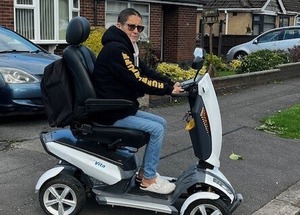
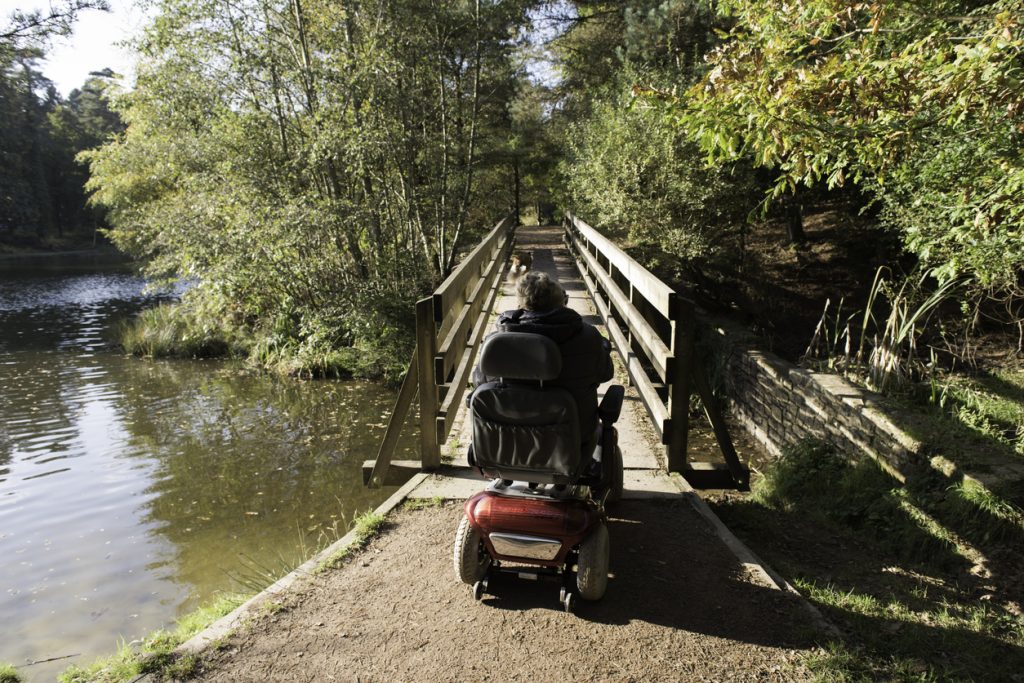
A mobility scooter is a battery-powered vehicle designed to help people travel further than they could on foot. They are commonly used for shopping trips, social visits and everyday errands.
Mobility scooters are particularly suitable for people who can walk short distances but struggle with longer journeys due to pain, fatigue or balance issues.
In the UK, mobility scooters can be used on pavements and pedestrian areas if the user has a genuine mobility need. Some larger models (Class 3 scooters) can also be used on the road, but additional rules apply.
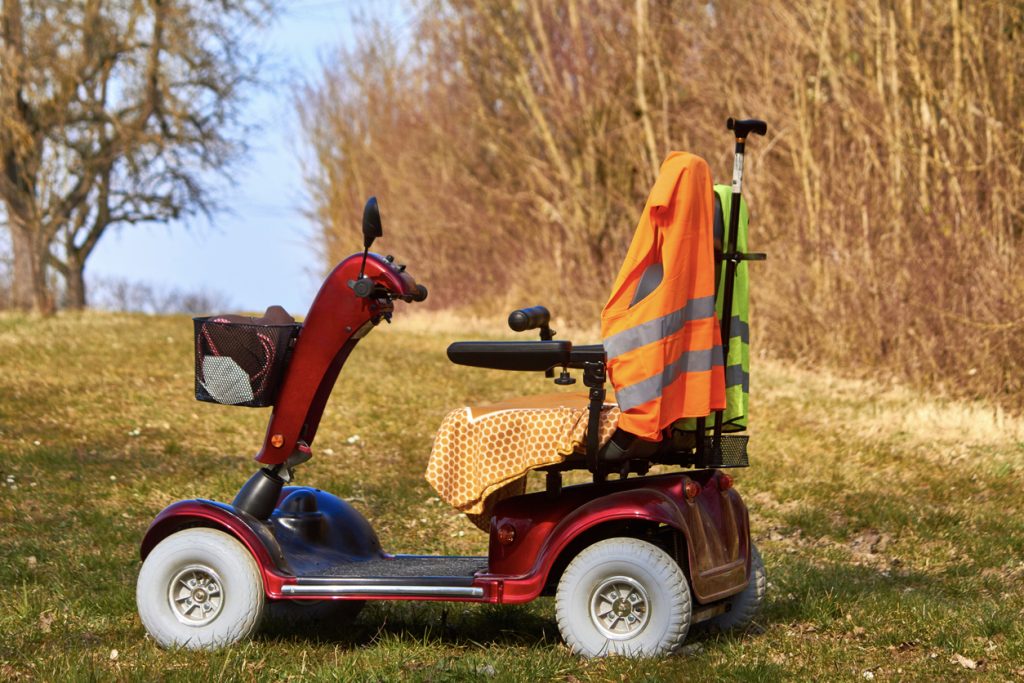
Mobility scooters are a good option if you:
- Want to stay independent outdoors
- Need help covering longer distances
- Can safely get on and off the scooter
Things to consider:
- Mobility scooters are often too large for indoor use
- They need space at home for storage and charging
- They are not usually provided by the NHS
Because mobility scooters are used in public spaces, many people choose to purchase mobility scooter insurance to protect against theft, damage, and third-party claims.
What is a Powerchair (Electric Wheelchair)?
A powerchair, sometimes called an electric wheelchair, is controlled using a joystick or similar control. Unlike a mobility scooter, it is designed for comfortable use indoors and outdoors.
Powerchairs are ideal for people who do not have the strength or stamina to push a manual wheelchair.
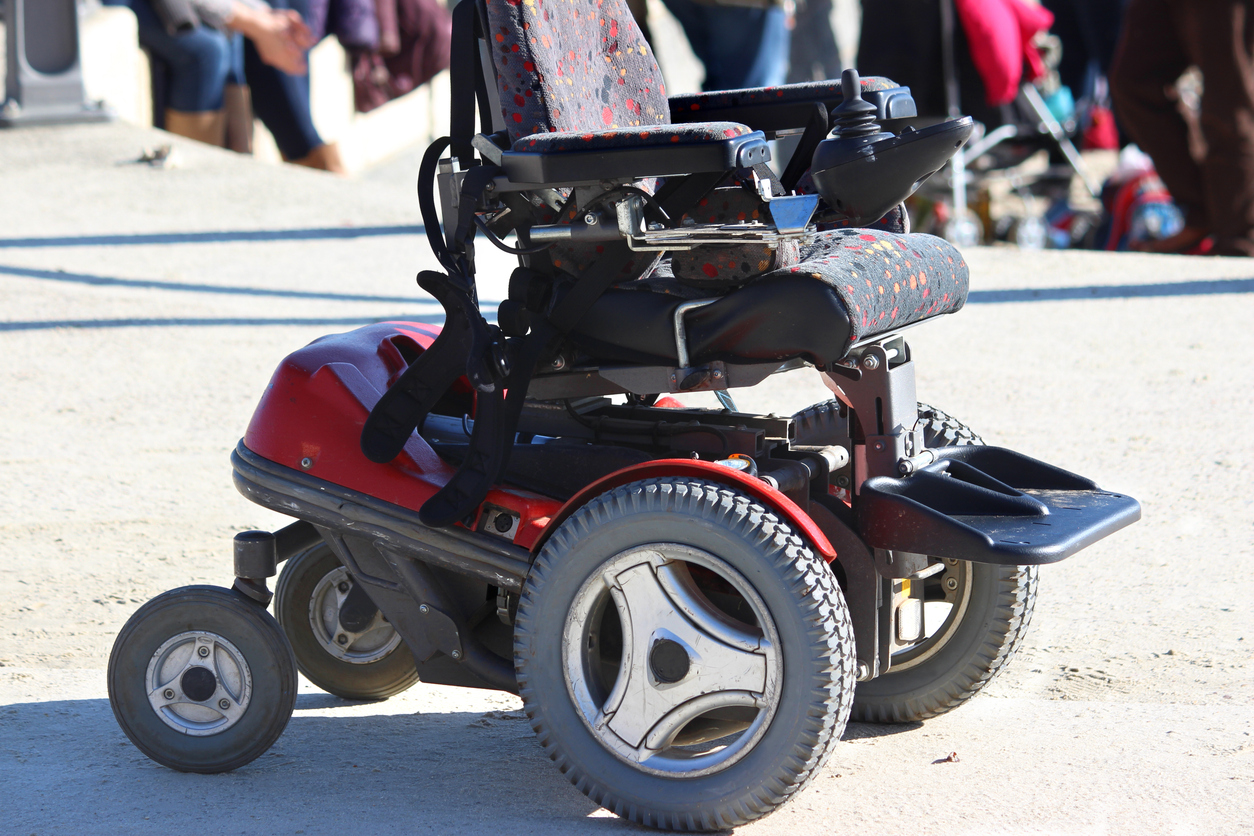
Powerchairs are a good option if you:
- Have limited upper-body strength
- Need mobility support throughout the day
- Want to move easily around your home
Things to consider:
- Powerchairs are heavier than manual wheelchairs
- Transporting them may require vehicle adaptations
- Charging and battery range need to be considered, particularly for regular use
Many powerchair users also choose powered wheelchair insurance for added peace of mind.
What is a Manual Wheelchair?
A manual wheelchair is pushed either by the user or by a carer. These are the most commonly used wheelchairs in the UK and are often provided by the NHS after an assessment.
Manual wheelchairs are generally lightweight, simple to use and more affordable than powered options.
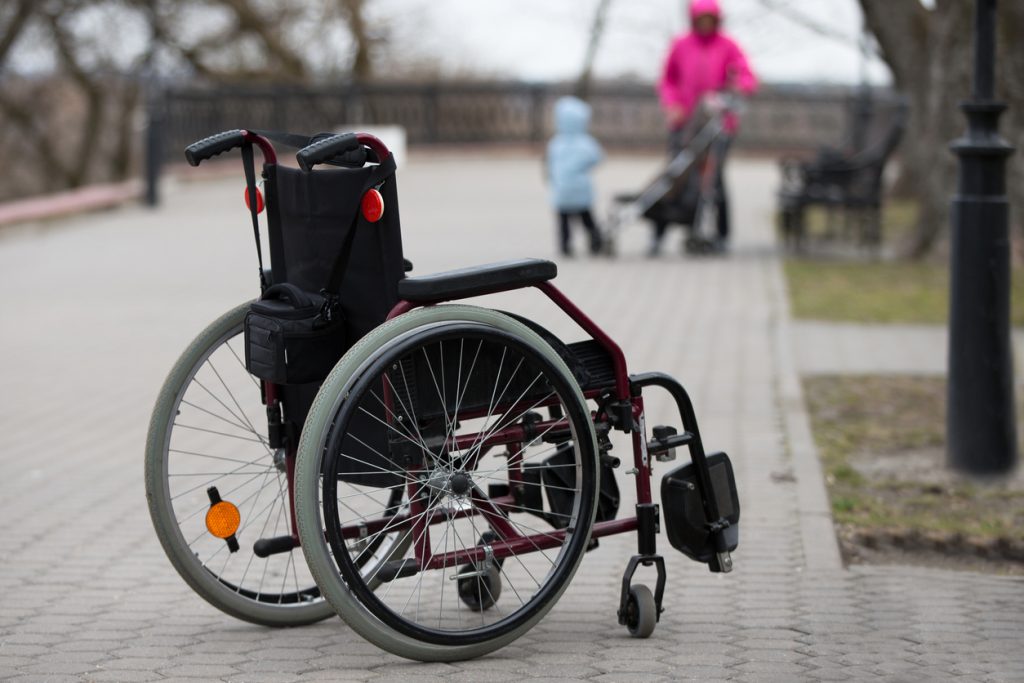
Manual wheelchairs are suitable if you:
- Have enough arm strength to self-propel or have someone to help push you
- Mainly need help indoors or for short distances
- Want something easy to transport
Things to consider:
- Pushing can be tiring over longer distances
- Outdoor use can be difficult on uneven ground
Although insurance is not required by law, some users choose wheelchair insurance to cover accidental damage or liability.
Indoor vs Outdoor Use
Where you plan to use your mobility aid most is important. This can help you decide which is right for you.
- Indoors: Manual wheelchairs and compact powerchairs are easier to manoeuvre in tight spaces.
- Outdoors: Mobility scooters and larger powerchairs are better suited to pavements, kerbs and longer distances.
Some people use different equipment depending on the situation.
Portability and Transport
How easy a mobility aid is to transport can make a big difference to day-to-day life, especially if you travel by car or rely on others for lifts.
Manual wheelchairs are usually the easiest option to transport. Most models fold down and can fit into a standard car boot, making them practical for trips out. They are also lighter, which makes lifting and handling easier for carers or family members.
Some powerchairs and mobility scooters are designed to be taken apart into smaller sections, allowing them to be transported in a car. However, larger or heavier models often require ramps, hoists or specialist vehicle adaptations.
Storage at home is another important factor. Mobility scooters can take up a significant amount of space and need somewhere safe and dry for charging.

Mobility Insurance
Cover available for:
- Mobility Scooter
- Powered Wheelchairs
- Manual Wheelchairs
- Cabin Cars
Physical Requirements for Each
It helps to consider what each mobility aid requires in terms of your strength, balance, and overall control. Using the wrong one can not only be tiring, but also unsafe.
- Manual wheelchair: These rely on your own physical strength to push yourself. You need good upper-body strength and stamina to use them comfortably, especially outdoors or over longer distances. If you find your arms fatigue quickly or you struggle with repetitive pushing, a manual wheelchair may not be suitable on its own.
- Powerchair (Electric Wheelchair): Powerchairs need little physical effort to operate. They are ideal if you cannot comfortably push a manual wheelchair due to limited strength, pain or fatigue. Control is usually through a joystick or simple interface, so you don’t need to rely on your arm strength. However, you need good hand control to use the controller with confidence and consistency.
- Mobility scooter: Scooters also require some physical ability. You need to be able to sit comfortably and hold the handlebars or steering controls steadily. Good balance and a level of coordination are important so you can steer, brake, and judge distances safely. As scooters are mostly used outdoors, being able to observe your surroundings and make safe decisions is part of using them well.
In the UK, a mobility assessment will often include both physical and cognitive checks to make sure you can use a powered aid safely. For example, occupational therapists routinely assess steering control, braking ability and the physical coordination needed to operate a mobility scooter or powered wheelchair.
It’s worthwhile to get assessed by a mobility specialist or an occupational therapist before making a final decision on which mobility aid is right for you. You can often get this assessment via the NHS, or privately if you choose.
Costs Comparison
The cost of a mobility aid varies widely depending on the type you choose and whether you buy privately or receive support through the NHS. When considering mobility aids, it’s essential to think not just about the upfront price, but also about the ongoing costs, such as batteries, servicing, and insurance.
- Manual wheelchairs: These are the most affordable to buy upfront. In the UK, basic manual chairs can cost as little as £50 to £400, while lighter-weight or more specialised models may cost up to £1,000 or more. Custom designs can even exceed this range.
- Mobility scooters: Smaller travel or boot mobility scooters can start around £500 to £1,500, while everyday pavement scooters typically sell for around £1,000 to £4,000. Larger, road-legal scooters or high-end premium models can cost from £4,000 to £6,000 or more. The cost varies widely depending on the model type.
- Powerchairs (electric wheelchairs): These are usually the most expensive to buy privately. Typical prices for newer, everyday models are roughly £1,600 to £4,500, and more advanced, configurable or all-terrain versions can go well above that, sometimes into the £7,000–£12,000+ range.
NHS Funding and Motability Options
Mobility aids can be costly if you pay privately, so many people look to NHS funding or the Motability Scheme to help.
NHS Wheelchair Services
The NHS can provide manual wheelchairs and, in some suitable cases, powered wheelchairs after a mobility assessment. A lot of people don’t realise these services exist until they speak with a GP, occupational therapist or specialist. Availability and waiting times vary, and some areas can have longer waiting times than others, which is why it’s a good idea to start the process early if you think you might need NHS support.
Wheelchair services on the NHS aim to provide equipment that meets your assessed needs, whether that’s a simple wheelchair for occasional outings or a more supportive model for daily use. The NHS route can avoid high upfront costs, but not everyone is eligible for powered options or certain advanced features, and some people choose to buy privately if they need something right away.
The Motability Scheme:
Another route to consider is the Motability Scheme, which lets eligible individuals use part of their disability allowance to lease a mobility aid.
You qualify for Motability if you receive certain mobility-related benefits, such as the higher rate mobility component of Personal Independence Payment (PIP) or similar allowances. Instead of buying a scooter or powered wheelchair outright, you lease it through the Scheme. This can make accessing a mobility scooter or powered wheelchair more affordable.
Insurance Requirements for Mobility Aids
When investing in a mobility scooter, powerchair or wheelchair, insurance is an important part of protecting your independence and peace of mind. The rules around insurance vary depending on the type of mobility aid you use, where you use it and how often it’s on the move.
Manual Wheelchairs: Although there is no legal requirement to have manual wheelchair insurance cover, you might still choose to insure if:
- You rely on it daily and want protection against accidental damage
- You want personal liability cover in case someone gets injured while you are pushing it
- You are using it frequently outdoors in public spaces
Mobility scooters: Again, they are not legally required to be insured in the UK. However, there are several important reasons why most scooter users choose to take out cover:
- Protection against theft or damage. Scooters are often left outside shops, homes or public places. A good insurance policy can cover replacement or repair if your scooter is stolen or badly damaged.
- Public liability cover. Even though you are not driving a motor vehicle, accidents can happen. Third-party liability cover protects you if someone claims compensation.
- Breakdown and roadside support. Many mobility scooter insurance policies offer optional extras such as breakdown assistance, which can be useful if your scooter stops working while you’re out.
Due to these reasons, most scooter users choose to take out mobility scooter insurance.
Powerchairs (Electric Wheelchairs): Powerchairs sit between manual wheelchairs and mobility scooters when it comes to insurance.
Because they are battery-powered and used on public pavements, many users prefer to have insurance in place. While there is no legal requirement for insurance in most situations, having cover gives you:
- Accidental damage cover
- Theft protection
- Public liability protection
Some people choose powerchair insurance that also includes breakdown assistance for peace of mind when out and about.
Which is Right for You? Decision Checklist
Choosing the right mobility aid is about finding what works best for your body, your home and your day-to-day life. A few key questions can help you narrow down your options and feel more confident in your decision. Ask yourself:
- Will I use it mainly indoors or outdoors?
- Can I push a wheelchair myself?
- Do I need something easy to transport?
- Am I eligible for NHS or Motability support?
- Do I have space to store it at home?
If you are still unsure, speaking to a mobility specialist or occupational therapist can provide helpful reassurance. With the right advice and equipment, you can choose a mobility aid that supports your independence, comfort and quality of life.